
Unlock 46+ Klaviyo systems, resources, and SOPs (100% free!)
Grab the exact systems and SOPs we use with our clients you can apply to your own store. This includes:


And much much more…

Blog
In-Depth Resources On How To Grow Your Business With Klaviyo
What to Look for in an Ecommerce Email Marketing Agency
What to Look for in an Ecommerce Email Marketing Agency
A well-run email and SMS program should drive 25 to 40% of a store's total revenue. Plenty of the brands we talk to are sitting closer to 15%, paying a monthly retainer the entire time it underperforms. Usually the account isn't broken, it's just being run on autopilot, with someone reporting open rates to make it look like something's happening while the number that actually matters, the share of revenue email drives, quietly stalls.
Choosing the right eCommerce email marketing agency is the difference between 15% and 35%, and the good news is you can tell which kind you're dealing with before you sign anything. This post gives you seven specific things to look for, a side-by-side of what separates a specialist from a generic provider, and the exact questions to ask before you sign.
The difference between an email program that prints money and one that limps along is rarely the platform. It's what the agency does with it. A strong eCommerce email marketing agency treats email and SMS as a revenue system built around how your business actually makes money, while a generic one treats it as a content calendar it has to fill every week.
According to Klaviyo's 2026 benchmarks, automated flows drive close to 41% of all email revenue while making up only about 5% of total sends, and revenue per recipient on flows runs roughly 18 times higher than on one-off campaigns. A good agency knows the money is in the flows and builds those first, then layers campaigns on top. A weak one leads with a campaign calendar because it's visible and easy to bill for, and leaves the flows half-finished.
It starts in the first call. A strong agency wants to know your average order value, your margins, and your repeat purchase rate before it recommends a single flow, because it's building you a system. A generic one just asks how many campaigns you want per month, because it's filling a calendar.

Source: Klaviyo 2026 Email Marketing Benchmarks
Once you know an agency is thinking in revenue instead of send volume, the next job is figuring out whether it can actually deliver. These are the seven things that separate an agency worth paying from one that'll quietly cost you a year, and you can check most of them before you ever sign.
1. A Strategy That Fits Your Business
Strategy is the part generic providers skip, because it doesn't produce anything you can see in week one. A strong agency starts by building a roadmap tied to how your business actually works, mapping your customer journey and deciding which flows and campaigns will move the numbers that matter for your margins and your repeat purchase rate. That roadmap is the difference between retention marketing, which is about squeezing more revenue out of the list you have, and lifecycle marketing, which is about maximizing what each customer is worth across the whole relationship. You want an agency that can tell you which one you need first and why.
The clearest test is whether the agency can diagnose a problem correctly. If your welcome flow is converting badly, that could be a segmentation problem, a creative problem, or a deliverability problem, and those are three completely different fixes. A generic provider treats all three the same and just rewrites the subject line. A specialist looks at the data, tells you which one it actually is, and fixes that.
2. Proven Klaviyo Expertise
Almost every agency will say it works with Klaviyo, but that tells you nothing. What you want is proof they live in the platform every day, and the first place to look is Klaviyo's own partner program, which ranks agencies in tiers from Silver up to Elite Master. Higher tiers mean an agency manages more revenue on the platform, so it's a useful filter, though it measures volume, not quality. Treat it as a starting point and verify the rest with real case studies and account screenshots.
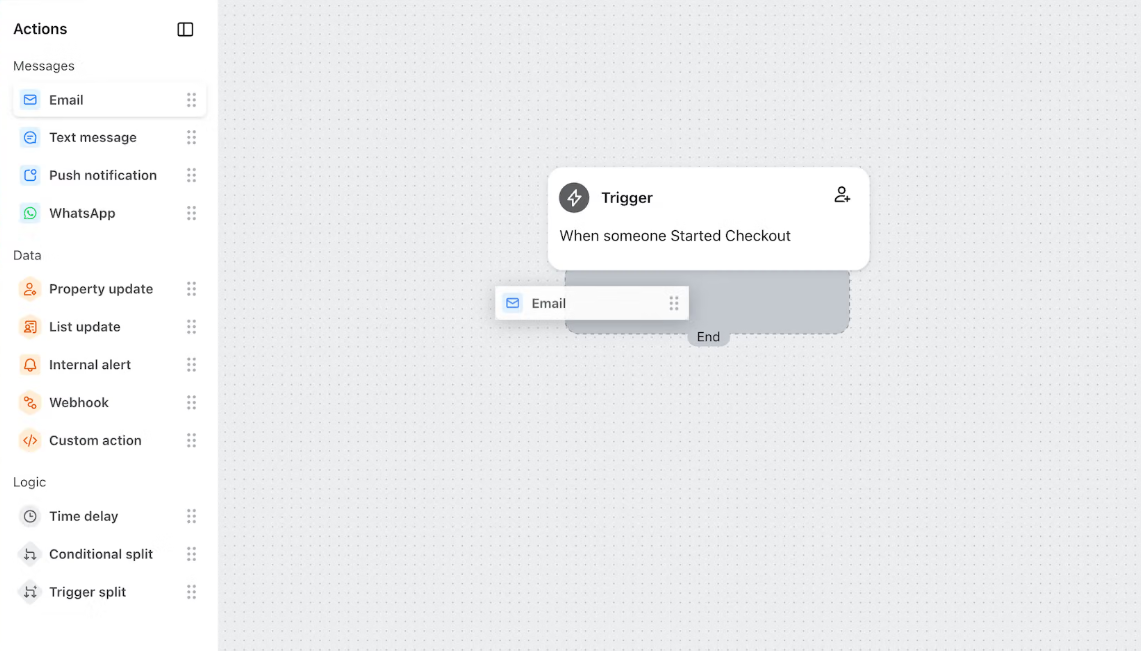
Then, test the depth directly. A surface-level agency can name the welcome flow and the abandoned cart flow, and that's about where it stops. A specialist can talk about building conditional splits several layers deep, using Klaviyo's predictive analytics to time a replenishment flow, and wiring Klaviyo into the rest of your stack, your Shopify Plus store, a subscription tool like ReCharge, reviews from Yotpo, and support tickets from Gorgias. If the conversation stays at "we'll set up your welcome series," you're talking to a generalist who happens to have a Klaviyo login.
Source: https://help.klaviyo.com/hc/en-us/articles/115002774932
3. Flows That Get Managed
Most agencies can build you a welcome flow and an abandoned cart flow, but the gap shows up in what happens after. Your foundational flows, welcome, abandoned cart, browse abandonment, and post purchase, are the ones every store needs, but the money in the advanced flows is what most brands leave on the table: win-back, replenishment, back in stock, and a real VIP flow for your best customers. A strong agency builds the foundational set fast and then keeps adding to it, because a store doing $3M with four flows is nowhere near its ceiling.
The bigger tell is whether those flows get touched again after launch. A generic provider builds them once, screenshots the revenue for the next sales call, and never opens them again. A strong agency treats flows as living things, testing offers, updating the timing, swapping products as your catalogue changes, because customer behaviour shifts and a flow that worked last year quietly decays. In a mature program, flows should be pulling somewhere around half of your total email revenue, and that number only holds if someone is actually maintaining them.
4. Design and Copy That Sell
Pretty emails don't make money. Emails that sell do. A strong agency builds you an email design system, a set of reusable, on-brand templates that look like your store and work as hard on a phone as they do on a desktop, so every send stays consistent without being rebuilt from scratch. That design still has one job, which is to sell, so the layout, the copy, the offer, and the call to action all exist to move someone from opening to buying, and an agency that talks only about how the emails look is missing the point.
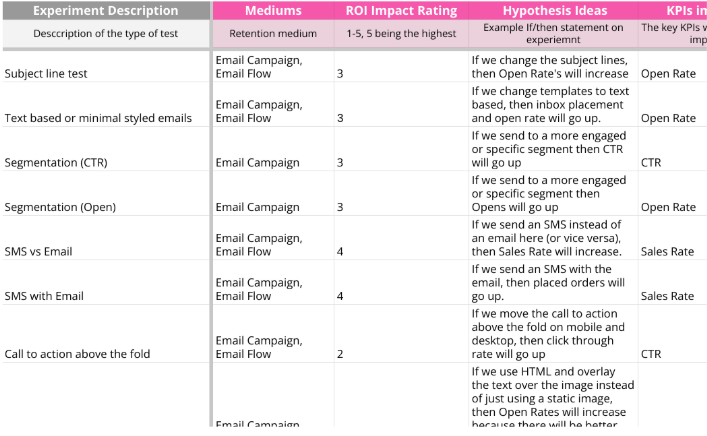
The thing to look for is a real testing habit. A generic provider picks a subject line, sends it, and moves on. A specialist runs structured A/B tests on subject lines, send times, and content, keeps what wins, and can show you the results. If an agency can't tell you what it tested last month and what it learned, it isn't really designing for conversion. It's just decorating.
5. Reporting You Can Actually Use
You should leave every reporting call knowing what happened, why, and what it did to revenue. That sounds obvious, but plenty of agencies send a dashboard full of open rates and click rates and call it reporting, which is a problem for two reasons. First, open rates have been unreliable since Apple started auto-loading email images in 2021, so the number you're looking at is inflated and doesn't tell you how many people actually read anything. Second, even a real open rate wouldn't tell you whether email made you any money.
A strong agency reports on the numbers tied to revenue: revenue per recipient, how much of your revenue comes from flows versus campaigns, your total Klaviyo-attributed revenue, and email's share of your overall store revenue. It also watches the health metrics that protect the channel, like list growth, unsubscribes, and deliverability, because a list that's quietly rotting will sink your results no matter how good the emails are. Ask to see a sample client report before you sign. If you can understand it in thirty seconds and it's built around revenue, that's a good sign. If it's a wall of vanity metrics, you have your answer.
6. Room to Scale
The agency that's right for you at $2M should still be right for you at $10M, and not every agency can make that jump. As you grow, email stops being the whole story. You add SMS, maybe push, and the real skill is running them as one coordinated program instead of three channels blasting the same person from three different tools, which is how customers end up annoyed and unsubscribing. A strong agency runs email and SMS together, times them so they don't collide, and keeps the whole thing compliant as it grows.
Then there's the team behind your account. A one-person shop can do great work until it can't, and you find out the hard way during your biggest send of the year. Ask who actually touches your account day to day, and whether there's a strategist, a copywriter, a designer, and someone who genuinely knows deliverability, or whether it's one generalist doing all of it. You're buying the work you need this quarter and the capacity to handle where you'll be in two years.
7. Pricing That Makes Sense
Most eCommerce email agencies charge a monthly retainer, and the range is wide. A campaign-only setup might run $1,500 to $3,000 a month, a full program with flows, campaigns, and SMS usually lands somewhere in the $3,000 to $6,500 range, and enterprise work goes up from there. Some agencies price by the project instead, which is a low-risk way to test one out on a single flow build before you commit to anything ongoing. None of those models is wrong, and the right one depends on how much you need done and how fast.
There's one pricing model worth being careful with, and that's revenue share, where the agency takes a percentage of the revenue email drives. It sounds fair, like they only win when you win, but the catch is that the agency usually controls the attribution window in Klaviyo, which means it's grading its own homework and deciding how much of your revenue counts as its work. Watch for the other red flags too: a guaranteed revenue percentage promised before anyone has looked at your account, a long lock-in contract with no clear way out, and any arrangement where the agency holds the keys to your Klaviyo account instead of you. You should own your account, always. A good agency earns the renewal every month instead of trapping you into it.
You've got the seven criteria. Here's the short version, the tells that separate an agency worth paying from one that'll cost you a year, laid out so you can spot them fast.
If the agency you're evaluating keeps landing in the left column, you already have your answer.
The comparison table tells you what to look for. These questions get an agency to show you which column it's in, and they're worth asking on the first call.
Who specifically will work on my account, day to day?
You want real names and roles: a strategist, a copywriter, a designer, and someone who owns deliverability.Can you show me a sample client report?
A strong report leads with revenue per recipient, flow revenue, and email's share of total store revenue.How do you decide what to build first?
Look for an audit followed by a roadmap that starts with the flows most likely to move revenue quickly.Do I keep full ownership of my Klaviyo account?
The answer should be an immediate yes, with your brand on the account and full admin access held by you.How do you charge, and what happens if I want to leave?
Look for a clear retainer or project fee, month-to-month or a defined term, and a clean way to exit.
What does an ecommerce email marketing agency do?
It builds and manages your email and SMS program, usually in Klaviyo, so it drives repeat purchases and revenue. That means setting up automated flows like welcome and abandoned cart, running your campaign calendar, designing on-brand emails, segmenting your list, and reporting on what all of it earns.
How much does an ecommerce email marketing agency cost?
Most charge a monthly retainer. A campaign-only setup runs roughly $1,500 to $3,000, a full program with flows, campaigns, and SMS typically lands around $3,000 to $6,500, and enterprise work goes higher. Some agencies price per project, which is a lower-risk way to test one before committing to a retainer.
What should I look for in an ecommerce email marketing agency?
Look for real strategy tied to your margins, proven Klaviyo expertise, flows that get managed and not just built, design that sells, and reporting built around revenue rather than open rates. The clearest sign of a specialist is that it measures success in revenue per recipient, not vanity metrics.
How long does it take to see results?
Usually two to three months. The first month goes to auditing the account, fixing deliverability, and building the flows that were missing, so revenue is limited early. Results start showing as those flows convert, and a well-matched agency often has email driving 25 to 35% of store revenue by month three.
Should I hire an agency, a freelancer, or build in-house?
It depends on your stage. A freelancer is the lowest-cost option but usually has limited range, in-house gives you the most control once you can afford a full team, and an agency gets you a strategist, designer, copywriter, and deliverability help for less than a single senior hire. Most growing brands start with an agency.
Do I keep control of my Klaviyo account if I hire an agency?
You should, always. A good agency works inside your account while you keep full ownership and admin access, so if you ever leave, your list, flows, and data stay with you. If an agency wants to own the account and rent you access, walk away.
The gap between an email program driving 15% of your revenue and one driving 35% almost never comes down to Klaviyo. It comes down to who's running it, and now you know how to tell the two apart before you sign anything. Take the comparison and the questions above into your next agency call, and you'll know within twenty minutes which column you're sitting in.
At FlowCandy, it's the same bar we hold ourselves to, because the brands that measure their email this way are the ones that stop getting sold bad programs.

Join the Newsletter
Subscribe to get our latest email marketing guides
We won't send you spam. Unsubscribe at any time


